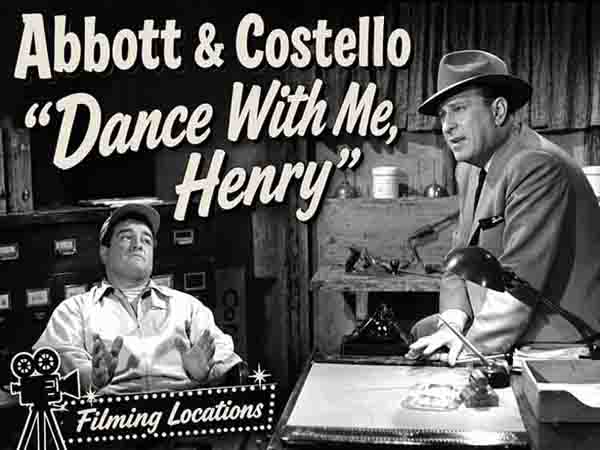
Abbott and Costello - Dance With Me, Henry (1956) - Filming Locations
The Last Days Of An Original Los Angeles Neighborhood
The 1956 comedy Dance With Me, Henry holds a significant place in cinema history as the final feature film made by the legendary comedy team of Bud Abbott and Lou Costello. Beyond its comedic legacy, the motion picture serves as a rare, invaluable visual record of the Palms neighborhood on the West Side of Los Angeles just before its massive mid-century urban transformation.
Abbott and Costello Filming Location In The Palms Neighborhood Of Los Angeles
For urban explorers and classic Hollywood location hunters, this specific production captures on film a now-vanished era of Southern California architecture:
- Primary Filming Location: 3400 block of Mentone Avenue (near Woodbine Street)
- Neighborhood: Palms / West Side Los Angeles, California
- Key Cinematic Era: Mid-Century Studio Era (1956)
- Crossover Classic: The First Seven Years (1930) starring Our Gang / The Little Rascals
The Our Gang Connection and the Rezoning of Palms
This particular block of Mentone Avenue has a rich cinematic pedigree. Decades before Abbott and Costello arrived, it was featured prominently as a real-world backdrop in the 1930 Our Gang / The Little Rascals short The First Seven Years.
What makes the 1956 footage so historic is its timing. It was filmed just as the City of Los Angeles zoning changes were taking effect in the Palms neighborhood. One by one, single-family homes that dated back to the very early 1900s were replaced with the higher density, multi-family apartment buildings we see today.
Watch the Palms Neighborhood Then and Now Video Tour
This Quick Preview Filming Locations Then and Now Video takes you directly to Mentone Avenue near Woodbine Street to witness the final days of the "old" Palms neighborhood.
- The Neighborhood Transformation: Witness the striking contrast between the historic, single-family homes seen on screen in 1956 and the modern apartment complexes that ultimately replaced them.
- A Living Landmark: Amidst the radical mid-century changes to the West Side landscape, one incredible detail remains. A historic tree featured prominently next to Lou Costello in the 1956 film is still standing today, serving as a living link to Hollywood history.
Charley Chase - All Wet (1924) - Filming Locations
The First Days Of A Historic Southern California Neighborhood
In the 1924 silent comedy short All Wet, Charley Chase delivers a masterclass in physical comedy as he battles a massive mud puddle that threatens to swallow his car. Filmed almost entirely on a single residential street, this production serves as an incredible visual record of the birth of a Culver City neighborhood.
A 100-Year-Old Time Capsule
This Quick Preview Filming Locations Then and Now Video takes you to the 8800 block of Carson Street, offering a rare glimpse of Southern California’s suburban expansion during the mid-1920s:
- A Neighborhood Under Construction: Witness Carson Street as it was being built over a century ago. The film captures the raw landscape and early architecture of the area before it became the established neighborhood it is today.)
- The Our Gang Connection: Film historians will recognize this exact location from the 1923 Our Gang / The Little Rascals movie, Dogs of War, filmed just one year prior.
- Dramatic Transformation: Our video comparison shows the striking shift from a muddy, developing construction site to the quiet, tree-lined street of today, featuring beautifully preserved 100-year-old homes.
Watch the Evolution of a Neighborhood Here
Click the button below to watch this Quick Preview of the complete Filming Locations video.
Watch The Quick Preview Video NowCharley Chase - Fast Work (1930) - Filming Locations
Los Angeles Filming Locations Then and Now
Released during the early "talkie" era, the 1930 Charley Chase comedy Fast Work serves as a vibrant visual record of pre-war Los Angeles. As a Hal Roach Studios production, the film utilizes several iconic locations that remain staples of Hollywood’s cinematic geography.
Iconic Mansions and Studio History
The filming locations then and now tour begins at a historic mansion in Los Angeles:
- The Mansion at 3500 West Adams Blvd: Early in the movie, Charley Chase appears at this opulent estate in the West Adams Historic District. Architecture and film buffs will recognize this as the same historic mansion used in the 1930 Laurel and Hardy comedy, Another Fine Mess.
- The Hal Roach Studios Connection: Since both films were produced by Hal Roach Studios in the same year, the site remains a fascinating example of how the studio maximized its location deals. Most remarkably, the mansion is still standing today and remains beautifully preserved.
Hollywood Street Scenes: Franklin and Whitley Avenue
This then and now comparison continues with a chase sequence involving an escaped lunatic:
- 1861 Whitley Avenue: The high-energy collision between Charley and the lunatic was filmed at the corner of Franklin Avenue and Whitley Avenue.
- Architectural Time Capsule: The apartment building at this intersection is still standing. Our then and now video analysis shows that the structure remains virtually unchanged since 1930, offering a rare "fingerprint" of classic Hollywood architecture.
The Filming Locations Then and Now Tour Starts Here!
Click the button below to watch this Quick Preview of the complete Filming Locations video.
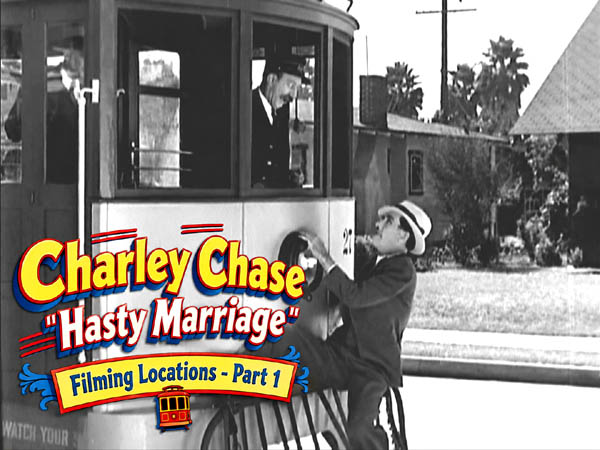
Watch The Quick Preview Video NowCharley Chase - Hasty Marriage (1931) - Part 1 - Filming Locations
Streetcars And Buildings Unchanged By Time
Charley Chase was a comedy director, writer and actor who did most of his work in the 1920s and 1930s. From being part of the team that created the Our Gang / The Little Rascals series in 1922, to starring in his own series of comedy short movies, to directing The Three Stooges in the late 1930s, Charley Chase rightfully has a place on any list of influential people responsible for American classic comedy movies.
Hasty Marriage is a 1931 movie that has Charley trying to convince his girlfriend's mother that he is a worthy suitor. Besides having a great supporting cast - including Laurel and Hardy favorite James Finlayson, the movie filmed almost entirely on location on a stretch of Second Avenue in Los Angeles. This movie also features real Los Angeles Railway streetcars running down Second Avenue - which explains why the street is so wide today (though the tracks are long gone).
Watch a quick excerpt from the "Then and Now" Filming Locations Tour Video
This first of TWO Quick Preview Videos of the filming locations focuses on the 4800 block of Second Avenue, the same location that Laurel and Hardy used for the closing scene of their comedy County Hospital a year later.
Click the button below to watch a Quick Preview of this filming locations video.
Watch The Quick Preview Video NowCharley Chase - Hasty Marriage (1931) - Part 2 - Filming Locations
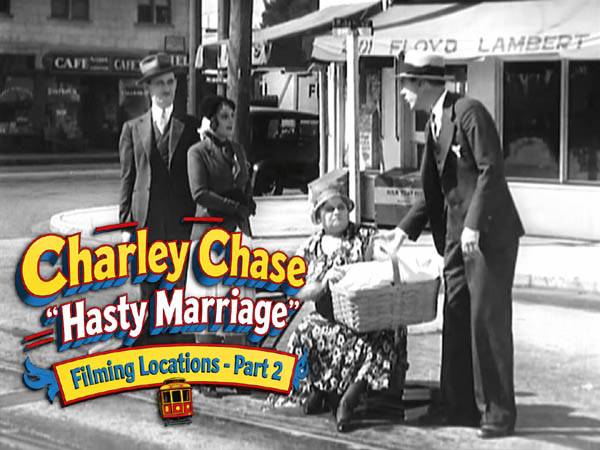
The Train Tracks Are Gone But The Buildings Remain
The second of two Quick Preview Videos of the filming locations from the Charley Chase movie Hasty Marriage takes us to the intersection of Second Avenue and West 54th Street in Los Angeles.
Back in 1931 when Hasty Marriage was filmed, this corner was an important hub for the neighborhood, featuring a grocery store and a cafe just across the street. Fast forward to the 21st century: Both the grocery store and cafe buildings are still standing, however both appear to be just barely hanging on.
There's also a great view north on Second Avenue showing the streetcar tracks, overhead electric wires and a whole bunch of 1920s and early 1930s automobiles parked on each side of the street.
Each of these then and now comparisons provides a great look at the dramatic changes to this part of Los Angeles over the past 95 years.
Watch a quick excerpt from the "Then and Now" Filming Locations Tour Video
Click the button below to watch a Quick Preview of this filming locations video.
Watch The Quick Preview Video NowCharley Chase - His Silent Racket (1933) - Filming Locations
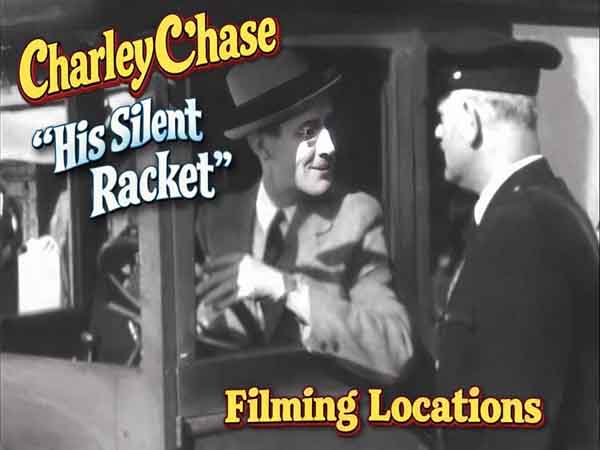
A Filming Locations Tour Of A Los Angeles Neighborhood
Released in 1933, the Charley Chase comedy short His Silent Racket features incredible on-location footage from the Palms neighborhood on the West Side of Los Angeles. This Then and Now tour explores the historic intersections that served as a real-world backlot for both Chase and the legendary Hal Roach Studios.
Iconic Silent Film Intersections: Palms Then and Now
This video preview takes you to the exact spots where cinematic history was made, featuring then and now comparisons of:
- Motor Avenue at Tabor Street: This intersection is a landmark for film historians. Beyond its appearance in His Silent Racket, it was famously used in the Our Gang / The Little Rascals classics Dog Heaven (1927) and Bouncing Babies (1929).
- Motor Avenue at Woodbine Street: Located just a few blocks away, this site was a favorite for Hal Roach directors. It is most prominently featured in the 1929 Our Gang / The Little Rascals comedy Boxing Gloves and appeared in numerous other Our Gang / The Little Rascals shorts throughout the 1920s and early 1930s.
- A Neighborhood Transformed: Witness the striking evolution of these West Los Angeles streets, comparing the quiet, suburban atmosphere of the 1930s with the densely developed modern-day landscape.
Watch the Evolution of a Neighborhood Here
Click the button below to watch this Quick Preview of the complete Filming Locations video.
Watch The Quick Preview Video NowCharley Chase - His Wooden Wedding (1925) - Filming Locations
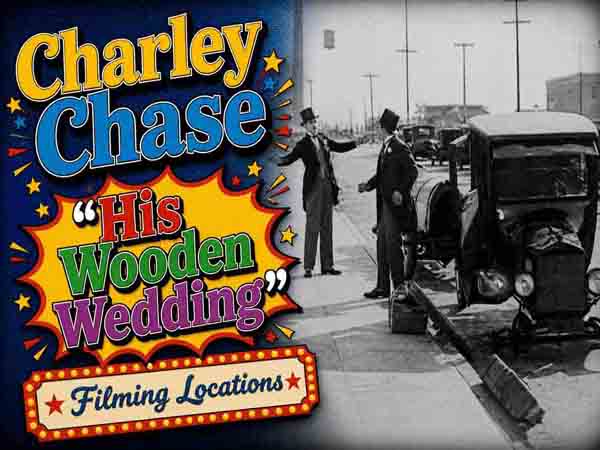
Explore Historic Downtown Culver City - The Heart Of Screenland
Filmed in 1925, the Charley Chase silent comedy His Wooden Wedding provides a stunning visual record of Culver City in its infancy. This Then and Now tour focuses on the area surrounding one of the most famous landmarks in the area.
Explore Historic Downtown Culver City
This video preview takes you to the heart of the "Heart of Screenland," featuring then and now comparisons of:
- The Culver Hotel (9400 Culver Blvd): Witness this architectural masterpiece when it was less than two years old. The film captures the building's original elegance and its early role as a hub for silent film stars and studio executives.
- The MGM Studios Water Tower: Look closely at the background of the 1925 footage to see the iconic water tower that stood for decades on the main MGM Studios lot - a landmark that has since become synonymous with the Golden Age of Hollywood.
- The Pacific Electric Railway: See the historic "Red Car" tracks that once ran directly down the center of Culver Blvd. Our video highlights this lost transit artery that connected Downtown Los Angeles to the beach communities of Playa del Rey and El Segundo.
Start The Journey Back In Time
Click the button below to watch this Quick Preview of the complete Filming Locations video.
Watch The Quick Preview Video NowCharley Chase - Innocent Husbands (1925) - Filming Locations
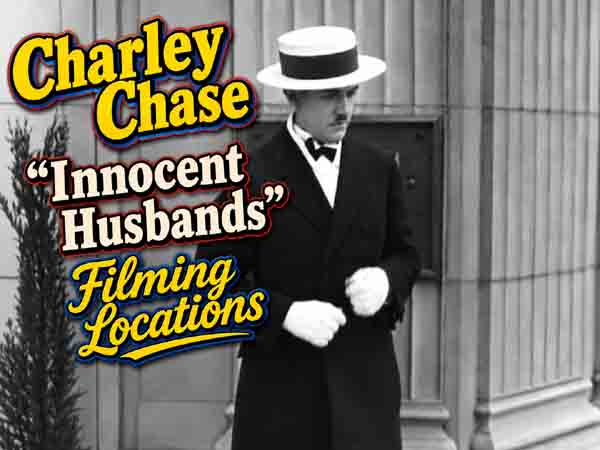
Innocent Husbands (1925) vs. Hunter (1986)
Discover the rich cinematic history of Downtown Culver City with this Filming Locations Then and Now breakdown. This historic spot bridges the gap between 1920s silent comedy and 1980s television crime drama.
- The Silent Era: The 1925 Charley Chase silent comedy short Innocent Husbands features extensive on-location footage filmed directly in front of the landmark Culver Hotel. At the time of production, the iconic building was barely a year old.
- The TV Era: Moving half a century forward, this exact same historic backdrop was utilized in 1986 for the TV series Hunter in the classic Season 2 episode, Scrap Metal.
The Exact Filming Location
This Quick Preview Filming Locations Video for Innocent Husbands provides a detailed, then and now comparison of:
- The Culver Blvd side of the hotel.
- The historic main entrance located at the prominent intersection of Culver Blvd and Main Street in Downtown Culver City, California.
Compare 50 Years Of History Here
Click the button below to watch this Quick Preview of the complete Filming Locations video.
Watch The Quick Preview Video NowCharley Chase - Limousine Love (1928) - Filming Locations
Historic Culver City Filming Locations
Following the tradition of his 1925 classic His Wooden Wedding, Charley Chase returns to the heart of Culver City in the 1928 comedy masterpiece, Limousine Love. This film provides an incredible, detailed visual tour of Downtown Culver City during the peak of the silent film era.
The Culver Hotel: A 100-Year Cinematic Landmark
This Then and Now filming locations tour features extensive footage of the world-famous Culver Hotel (9400 Culver Blvd). Our video comparison highlights:
- Detailed Views: See the historic hotel from several unique angles as it appeared in 1928.
- Restoring 1920s Elegance: We contrast the vintage footage with the building’s current state. Since its multi-million dollar renovation in the mid-2010s, the hotel has been meticulously restored to its original 1920s elegance.
- Downtown Culver City Tour: The second half of Limousine Love serves as a moving time capsule, taking viewers through the commercial district as it looked nearly a century ago. This part of the filming locations tour is available to current members of the site.
Step Back In Time Now!
Click the button below to watch this Quick Preview Filming Locations Video.
Watch The Quick Preview Video NowCharley Chase - Midsummer Mush (1933) - Filming Locations
Filming Locations Tour Of The Westside Of Los Angeles
Released in 1933, the Charley Chase comedy classic Midsummer Mush serves as an outstanding visual time capsule of two legendary Hal Roach Studios filming locations. This Then and Now tour explores how two Los Angeles area intersections evolved over several decades of cinematic history.
Historic Intersections: From Silent Comedy to 70s TV
This video preview takes you to the exact spots where some of Hollywood's most famous comedy movies and TV episodes were filmed:
- Motor Avenue & Tabor Street (Palms): The first half of our tour focuses on this historic Palms intersection. Film historians will recognize this site from the 1929 Our Gang / The Little Rascals short Bouncing Babies. Remarkably, this same location was used 50 years later in the Target Angels episode of the hit TV series Charlie's Angels.
- Main Street & Culver Blvd (Downtown Culver City): The second half of our tour shifts to the center of the "Heart of Screenland." This intersection was a favorite filming location for local studios in the 1920s and 30s. It features prominently in the 1928 Laurel and Hardy comedy movie Leave 'Em Laughing and the 1930 Nat Carr comedy Traffic Tangle.
Start The Filming Locations Tour Now!
Click the button below to watch this Quick Preview Filming Locations Video.
Watch The Quick Preview Video NowCharley Chase - On The Wrong Trek (1936) - Filming Locations
Hal Roach Studios Ranch Filming Location
As one of the final comedy shorts Charley Chase created for Hal Roach Studios, the 1936 film On The Wrong Trek serves as a rare visual record of the entrance to the studio's ranch property.
The Hal Roach Studios Ranch PLUS Laurel and Hardy Cameo
This Quick Preview filming locations video takes you to a location that was once the heart of Roach's outdoor production: The Hal Roach Studios Ranch entrance at South Robertson Blvd & Hillsboro Avenue in the Beverlywood section of Los Angeles.
- The Studio Ranch (South Robertson Blvd & Hillsboro Avenue): A rare visit to the entrance to the Hal Roach Studios ranch. Film history enthusiasts will appreciate this site, as dozens of Hal Roach Studios movies filmed at the ranch between 1924 and 1940. The ranch was where Miss Crabtree's school house was located as seen in the Our Gang / The Little Rascals movie Teacher's Pet. Laurel and Hardy filmed most of their 1929 movie The Hoose-Gow at the ranch, along with their 1932 comedy Towed In A Hole.
- A Surprise Appearance: The scene in this Quick Preview filming locations video features a cameo appearance by Laurel and Hardy.
- The Birth of Beverlywood: Just a few years after this scene was filmed, Hal Roach sold the ranch property to developers. Our "Then and Now" comparison shows this famous filming location transformed into the beautiful, upscale Beverlywood neighborhood of today.
Hop On The Filming Locations Tour Now!
Click the button below to watch this Quick Preview Filming Locations Video.
Watch The Quick Preview Video NowColors - High Top Chase Scene (1988) - Filming Locations
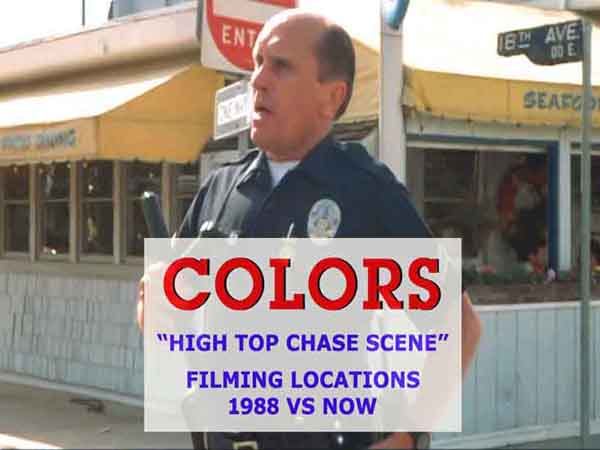
A Chase Through The Streets Of Venice Beach
In the 1988 action movie Colors, veteran Los Angeles police officer Bob Hodges (Robert Duvall) and his hot-headed rookie partner Danny McGavin (Sean Penn) find themselves on the front lines of a fierce war against street gangs in Los Angeles neighborhoods.
Historic Venice Beach Filming Locations: Then and Now
Venice Beach in Los Angeles, California, has a storied history as a favorite Hollywood filming location dating back to the silent film era. Iconic filmmakers and comedy legends frequently utilized the vibrant beachside backdrop, including:
- Charlie Chaplin for his 1915 comedy short By The Sea
- Buster Keaton a few years later for his classic 1921 movie The High Sign
- Our Gang / The Little Rascals, who shot the entire second half of their 1933 comedy Fish Hooky at the Venice Amusement Pier
The Iconic "High Top" Chase Scene in Colors
In this memorable sequence from Colors, the production moves to the Westside. The scene features Robert Duvall chasing a suspect through the streets of Venice Beach. Meanwhile, Sean Penn takes an alternate tactical route down the iconic Venice Beach Speedway to cut him off.
Watch The Quick Preview Video
This Quick Preview Filming Locations Video highlights the start of the high-energy pursuit, tracking the characters from Windward Avenue at the beach over to Pacific Avenue.
Click the button below to watch now!
Watch The Quick Preview Video NowEdgar Kennedy - It's Your Move (1945) - Filming Locations
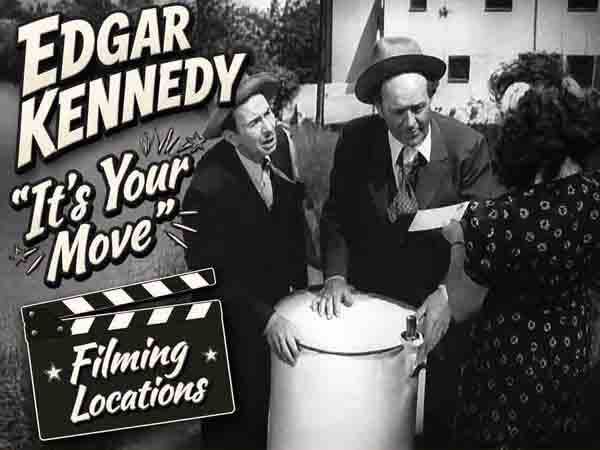
The Famous Los Angeles Descanso Steps As Filming Location
A classic plot in early cinema involves the comedic struggle of carrying bulky objects up a daunting flight of stairs. While the 1932 Laurel and Hardy masterpiece The Music Box is the most famous example, several other comedy legends utilized this exact plot device. Notable examples include The Three Stooges in their 1941 comedy An Ache in Every Stake and Charley Chase's brilliant performance in Isn't Life Terrible (1925).
At first glance, many classic film fans mistake the setting of the 1945 Edgar Kennedy short It's Your Move for the landmark Music Box Steps in Silver Lake. However, this RKO Radio Pictures production actually utilized a completely different, equally impressive urban staircase.
For film historians and urban explorers tracking down historic Los Angeles cinematic landmarks, here are the precise location details:
- Primary Filming Location: The Descanso Steps, 3200 Larissa Drive
- Neighborhood: Silver Lake / Los Angeles, California
- Key Cinematic Era: Mid-Century Comedy Shorts (1945)
- Historical Crossover: Frequently confused with the Laurel and Hardy Music Box site located just a short distance away.
The Hills Of The Silver Lake Neighborhood
This neighborhood's unique hillside geography made it an absolute favorite for physical comedy directors during the golden age of cinema. The steep, sprawling concrete staircases built into the hills around this area provided the perfect real-world stage for sight gags, exhausting stunts, and chaotic prop comedy.
Watch the Descanso Steps Then and Now Video Tour
Want to see how this legendary outdoor staircase looks today compared to the 1945 film? This Quick Preview Filming Locations Then and Now Video takes you on a direct then and now tour of these famous stairs.
Watch The Quick Preview Video NowGlenn Tryon - 45 Minutes From Hollywood (1926) - Filming Locations
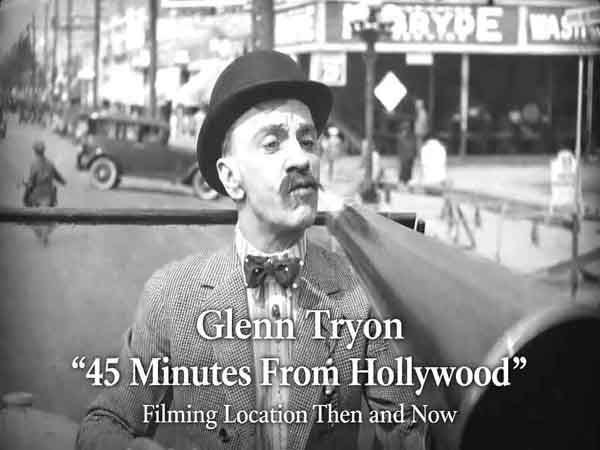
Hollywood And Culver City Filming Locations
In the mid-1920s, Hal Roach Studios launched a series of comedy shorts starring actor Glenn Tryon. Following the studio's tradition of extensive location shooting, the 1926 film 45 Minutes From Hollywood serves as an incredible 100-year-old time capsule of Southern California.
Bright And Bustling Streets
45 Minutes From Hollywood provides eye-opening views of the Los Angeles area of the 1920s, featuring a variety of historic backdrops:
- Downtown Culver City: The Descanso Steps, 3200 Larissa Drive
- Hollywood and Los Angeles: Silver Lake / Los Angeles, California
Take A Then and Now Video Tour
Because these scenes were filmed on location a century ago, they offer us a unique opportunity at time travel! This Quick Preview Filming Locations Video provides a fascinating then and now comparison, taking us on a tour of these historic sites.
Click the button below to watch now!
Watch The Quick Preview Video NowMax Davidson - Dumb Daddies (1928) - Filming Locations
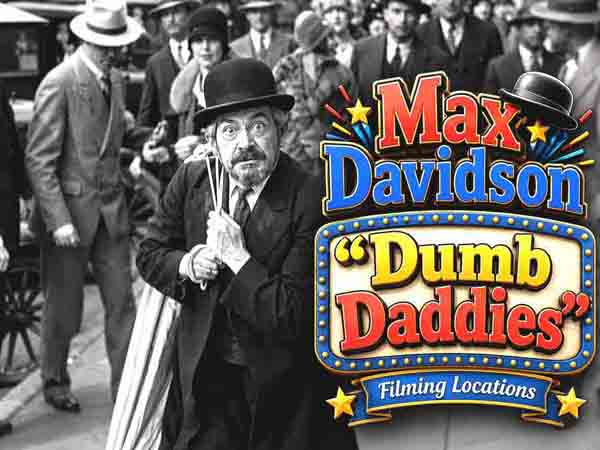
Who Was Max Davidson?
Max Davidson was a standout comedic talent of the silent era, celebrated for his popular series of films made at the Hal Roach Studios during the mid-to-late 1920s. His 1928 comedy Dumb Daddies is not just a masterpiece of character acting; it is a definitive historical record of the Los Angeles area from a century ago.
No Need For Backlots
Unlike many films of the era that used studio backlots to film outdoor scenes, Dumb Daddies made extensive use of the real-world streets of Downtown Culver City. The film provides an incredible, in-depth look at Main Street, capturing almost every inch of the historic district as it existed in 1928, including:
- The Alleys of Main Street: The production utilized the narrow alleys between the buildings, offering a rare "behind-the-scenes" look at the city's early layout.
- Meticulous Preservation: Remarkably, all of the buildings and alleys featured in the 1928 film are still standing today. A visit to these locations offers a rare opportunity to see exactly what Max Davidson saw during production nearly 100 years ago.
Take A Then and Now Video Tour
For film historians and fans of Hal Roach comedies, this neighborhood remains one of the best-preserved filming sites in the Los Angeles area. This Quick Preview Filming Locations Then and Now Video takes you on a virtual tour of these historic spots, comparing the 1928 footage with the vibrant Downtown Culver City of today.
Click the button below to watch now!
Watch The Quick Preview Video NowMax Davidson - The Boy Friend (1928) - Filming Locations - Part 1 of 2
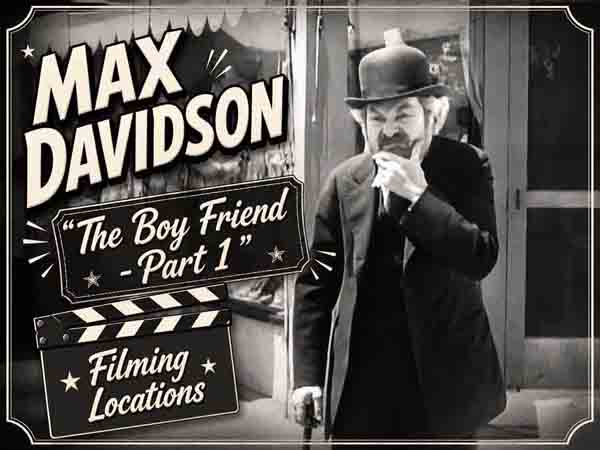
Touring 1920s Downtown Culver City
The 1928 comedy short The Boy Friend stands as another brilliant entry in Max Davidson's series at Hal Roach Studios. Beyond the comedy, the film provides a stunning visual record of Downtown Culver City during the late silent era, featuring some of the area's most iconic landmarks.
Because this production features so much on-location footage, this then and now filming locations tour is divided into two parts. This first part focuses on the area surrounding the historic Culver Hotel, located at 9400 Culver Blvd.
A Young Icon: The Culver Hotel
At the time of filming in 1928, the Culver Hotel was only four years old. The movie offers clear views of the Culver Blvd side as it appeared in its earliest days.
Walking Main Street In Culver City - Then and Now
We also tour the heart of the city, with excerpts from several key scenes filmed along Main Street. It's all here in the first of our two Quick Preview Filming Locations Then and Now Videos.
Click the button below to watch now!
Watch The Quick Preview Video NowMax Davidson - The Boy Friend (1928) - Filming Locations - Part 2 of 2
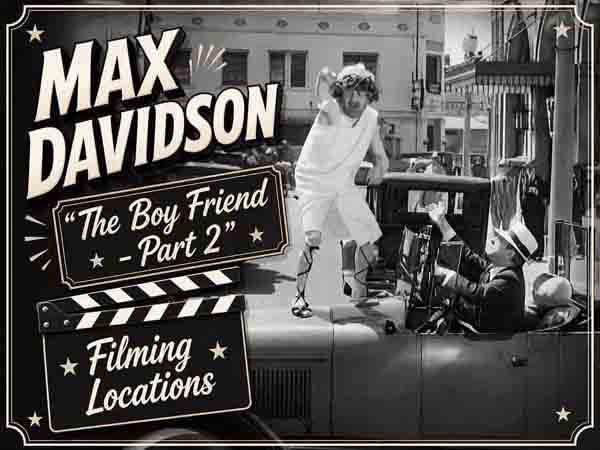
Looking At The Historic Downtown Core Of Culver City
Continuing our then and now tour of the historic filming locations used in the 1928 silent comedy The Boy Friend, starring comedy legend Max Davidson. Picking up where Part 1 left off, this second Quick Preview Filming Locations Video explores more of the historic downtown core of Culver City, California, as it appeared nearly a century ago during the height of the silent film era.
Culver City Filming Location Details
For classic film historians and urban explorers, this installment provides a rare, highly localized look at early 20th-century Southern California architecture and infrastructure:
- Primary Location: 9400 Block of Culver Boulevard, Culver City, California
- Featured Intersection: Culver Boulevard and Cardiff Avenue
- Key Cinematic Era: Late Silent Film Era (1928)
- Crossover Classic: Wages of Tin (1925) starring Glenn Tryon
- Lost Landmark: The historic Culver City telephone exchange building
The Cardiff Avenue and Glenn Tryon Connection
This leg of the tour captures a highly detailed look at the north side of the 9400 block of Culver Blvd before turning the corner onto Cardiff Avenue. Movie buffs will recognize Cardiff Avenue as a prominent backdrop from another classic Hal Roach Studios production: The 1925 Glenn Tryon comedy short Wages of Tin.
A Rare Look at Early Culver City Infrastructure
One of the most exciting aspects of this archival footage is a very rare look at the historic Culver City telephone exchange building. While many early 1920s utility buildings have been lost to mid-century modernization and commercial redevelopment, this footage provides a priceless visual record of the city's early infrastructure and industrial design.
Click the button below to watch now!
Watch The Quick Preview Video NowMax Davidson - Why Girls Say No (1927) - Filming Locations
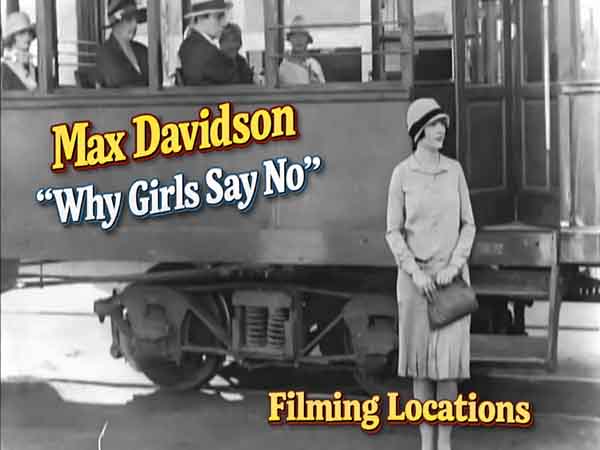
Visiting The Larchmont Village Neighborhood Of Los Angeles
The 1927 silent comedy Why Girls Say No, directed by Leo McCarey and starring Max Davidson, offers a stunning visual tour of the beautiful Larchmont Village neighborhood in Los Angeles. This Hal Roach Studios production focuses heavily on a single historic block, serving as a detailed, 100-year-old time capsule of one of LA's most charming and well-preserved commercial districts.
Historic Larchmont Boulevard Filming Location Details
For film historians and urban explorers planning a trip to Los Angeles, this specific filming location provides an incredible look at early Hollywood transit and architecture:
- Primary Location: 100 Block of North Larchmont Boulevard, Los Angeles, California
- Key Cinematic Era: Late Silent Film Era (1927)
- Transit Landmark: The historic Los Angeles Railway streetcar line (Yellow Cars)
- Preservation Status: High. Almost all the original commercial buildings captured on film in 1927 are still standing today, retaining their vintage 1920s architecture.
The Three Stooges Connection to Larchmont Blvd
The transit history captured in Why Girls Say No has a fascinating overlap with other classic comedy shorts. The opening of the film features rare footage of a Los Angeles Railway streetcar operating right down the center of Larchmont Boulevard. This is the exact same streetcar line prominently featured nearly a decade later in the 1936 film False Alarms starring The Three Stooges.
Click the button below to watch now!
Watch The Quick Preview Video NowNat Carr - Traffic Tangle (1930) - Filming Locations - Part 1 of 2
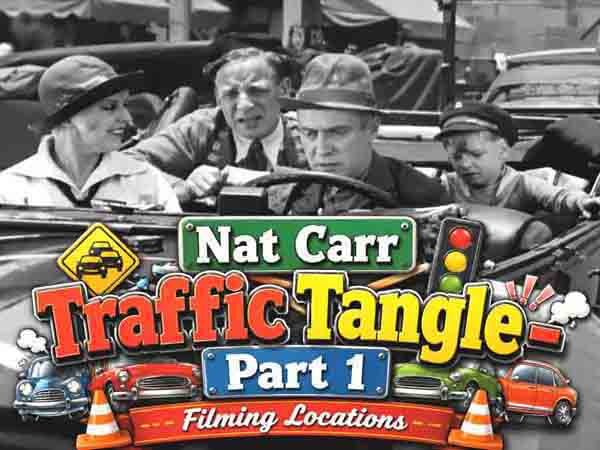
A Look At Historic Main Street In Culver City
While Hal Roach Studios is legendary for utilizing the streets of Culver City for classic comedy backdrops, they were not the only production company operating in the area. The nearby Pathé Studios also took full advantage of the city's downtown core, leveraging its vintage architecture as a highly versatile backdrop for early sound era productions.
Pathé Studios and the Traffic Tangle (1930) Location Tour
In 1930, Pathé released the classic comedy short Traffic Tangle, starring Nat Carr. This first Quick Preview Filming Locations Video focuses specifically on the legendary Main Street in Downtown Culver City.
The Laurel and Hardy Connection and Urban Preservation
Classic Hollywood enthusiasts and fans of Laurel and Hardy will immediately recognize the historic storefronts captured in the 1930 footage. These identical structures served as prominent backdrops in numerous silent films starring the iconic duo, including the 1928 classic Leave 'Em Laughing.
Click the button below to watch now!
Watch The Quick Preview Video NowNat Carr - Traffic Tangle (1930) - Filming Locations - Part 2 of 2
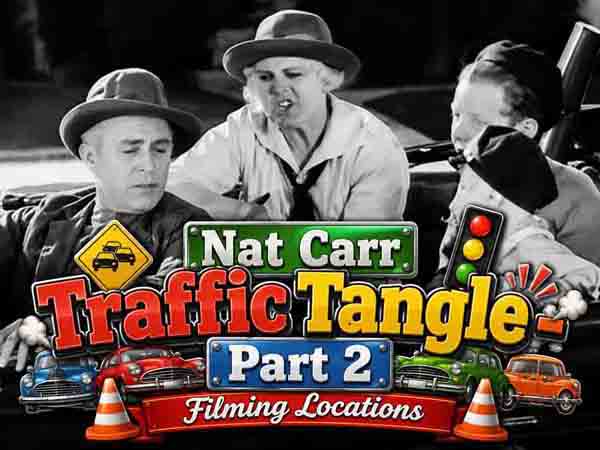
A Culver City Residential Neighborhood Then And Now
Our ongoing exploration of vintage movie locations from the 1930 classic comedy short Traffic Tangle moves from the commercial center of Main Street into a classic Culver City residential neighborhood. Starring Nat Carr, this Pathe production provides a great visual archive of one of the early residential neighborhoods of Culver City.
Historic Carson Street Architecture as a Mid-1920s Time Capsule
During production, the film crew utilized the 9000 block of Carson Street in Culver City, capturing a row of residential homes that were newly constructed at the time of filming:
- 9020 Carson Street (Built 1924): Featured prominently in the 1930 footage, this residence stands as a pristine example of pre-depression era home construction.
- 9025 Carson Street (Built 1926) & 9015 Carson Street (Built 1929): Positioned across the street, these homes also appear virtually the same as they did in 1930.
Preservation of Classic Hollywood Locations
As showcased in this Quick Preview Movie Locations Video, the level of historical preservation on Carson Street is extraordinary. This specific Culver City block remains remarkably unaltered, offering a rare then and now historical contrast that allows viewers to experience the exact streetscapes of 1930.
Click the button below to watch now!
Watch The Quick Preview Video NowSteve Martin - L.A. Story (1991) - Filming Locations
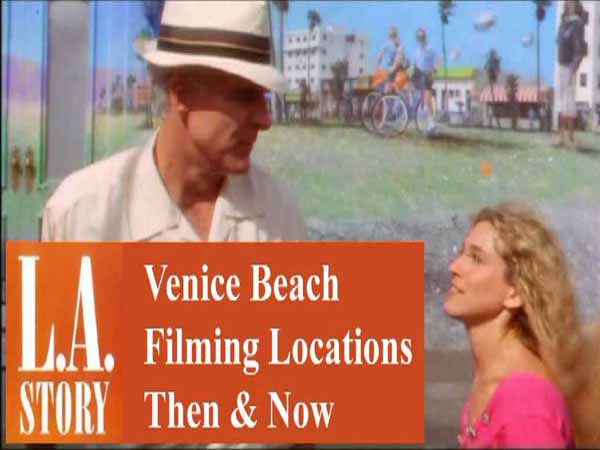
A Visit To Venice Beach In Los Angeles
The 1991 comedy movie L.A. Story stars Steve Martin as a Los Angeles TV weatherman having a mid-life crisis. He ends up in a relationship with a much younger woman - Sarah Jessica Parker who lives in the colorful Venice Beach neighborhood of Los Angeles.
Links To Early Hollywood Movies
Movies have been filmed on location in Venice Beach as early as the 1910s. Charlie Chaplin's 1915 comedy By The Sea and Buster Keaton's 1921 movie The High Sign were two early movies that filmed here. The Venice Beach neighborhood has always featured interesting architecture as it was modeled after Venice, Italy.
We look at a scene where Steve Martin stops by Sarah Jessica Parker's apartment building located at 23 Windward Avenue - one of the last of the original buildings from the earliest days of Venice Beach.
Sharing A Filming Location With The 1991 Cop Movie Colors
Much closer in time to when L.A. Story filmed here in 1990, the cop drama Colors starring Sean Penn and Robert Duvall filmed a chase scene at this same location, starting on Windward Avenue directly across from 23 Windward Avenue.
Historical Preservation and Venice Beach Landmarks
One by one over the decades, the original buildings put up by developer Abbot Kinney in 1905 have fallen to the wrecker's ball. As of now, 23 Windward Avenue - one of those original buildings - has yet to be granted landmark status.
Click the button below to watch now!
Watch The Quick Preview Video NowThelma Todd and Patsy Kelly - Beauty And The Bus (1933) - Filming Locations
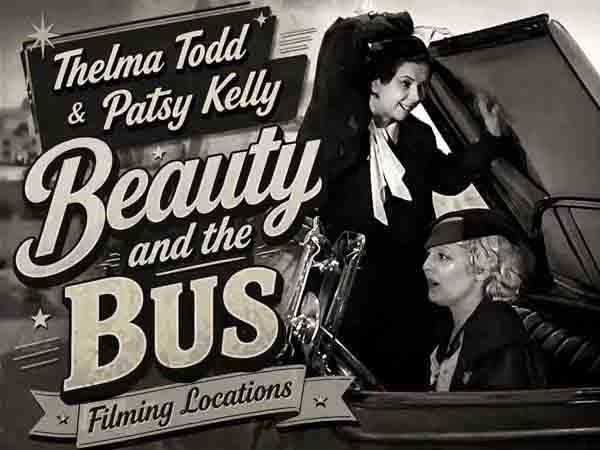
The Early Years Of Westwood Village
The 1933 comedy short Beauty and the Bus stars Thelma Todd and Patsy Kelly on a chaotic driving adventure through the Westwood Village section of Los Angeles. Produced by Hal Roach Studios, this film serves as a vital historical archive, capturing the neighborhood's signature Mediterranean-style architecture just four years after its 1929 inception.
Early Hollywood Sound Production & Rear-Projection
By 1933, major movie studios were transitioning away from purely on-location filming for driving sequences, increasingly utilizing rear-projection (process photography) on indoor soundstages. This structural blend offers an invaluable perspective on how early sound films balanced technological constraints with real-world backdrops.
Historical Preservation and Westwood Landmarks
Because commercial development in Westwood Village only began in 1929, the film functions as a crucial visual record of the area in its infancy. In the 90+ years since production, many of the landmark commercial buildings captured in the 1933 footage remain standing and beautifully preserved.
Click the button below to watch now!
Watch The Quick Preview Video NowThelma Todd and Zasu Pitts - Sneak Easily (1932) - Filming Locations
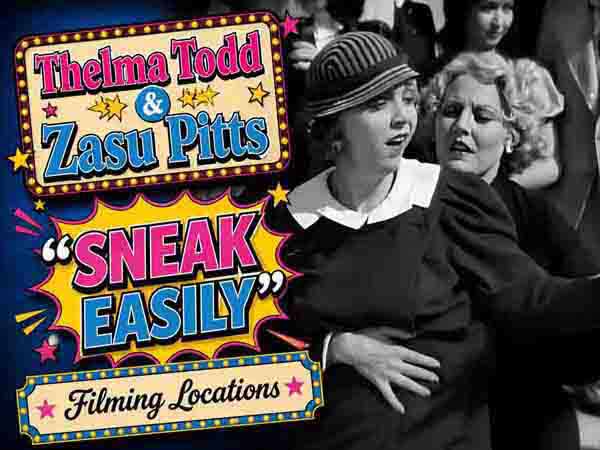
Touring Historic Beverly Hills And Los Angeles
In the early 1930s, legendary Hollywood producer Hal Roach sought to recreate the slapstick magic of his most famous comedy duo by teaming Thelma Todd and Zasu Pitts as a "female version of Laurel and Hardy." Their 1932 classic comedy short Sneak Easily stands out as a highlight of the series, highly prized by film historians for its extensive on-location footage of iconic Los Angeles area landmarks.
Landmark 1: Beverly Hills City Hall (Beverly Hills, CA)
Our Filming Locations Then and Now Quick Preview Video begins with a visit to the historic Beverly Hills City Hall, which was brand new to the Southern California landscape at the time of the 1932 production. Celebrated for its stunning Spanish Renaissance architecture, the building was officially declared Beverly Hills Historic Preservation Landmark #12.
Landmark 2: Pacific Electric Railway Fletcher Viaduct (Silver Lake, Los Angeles)
The geographical tour then travels east to the vibrant Silver Lake neighborhood for a rare look at the lost transit infrastructure of Southern California: the Pacific Electric Railway Fletcher Viaduct. While this massive "Red Car" railway bridge was demolished in 1959, the concrete footings of the viaduct's supports still exist and have been designated Los Angeles Cultural Monument #770.
Click the button below to watch now!
Watch The Quick Preview Video NowThe Ladykillers (1955) - Filming Locations
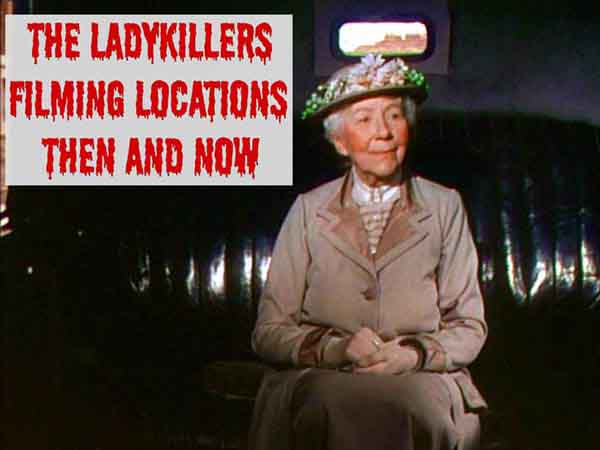
A Historic London Time Capsule
Part comedy, part thriller, and entirely a cinematic masterpiece, The Ladykillers is a quintessential Ealing Studios British black comedy classic. Starring legendary screen icons Alec Guinness and Peter Sellers, this landmark movie is highly celebrated for its extensive and gritty on-location outdoor filming, serving as an irreplaceable visual record of post-World War II London.
The Historic King's Cross / St. Pancras District in the 1950s
The vast majority of The Ladykillers filming locations were centered in the immediate urban area surrounding London’s St. Pancras and King's Cross train stations.
A Then and Now Tour of Central London Streets
This exclusive Filming Locations Then and Now Quick Preview Video takes you deep into the heart of this historic district to witness how little this iconic United Kingdom landscape has transformed over the decades, from the historic train platforms of King's Cross to the residential streets that served as the setting for Mrs. Wilberforce's famous house.
Click the button below to watch now!
Watch The Quick Preview Video NowThe Taxi Boys - Bring 'Em Back A Wife (1933) - Filming Locations
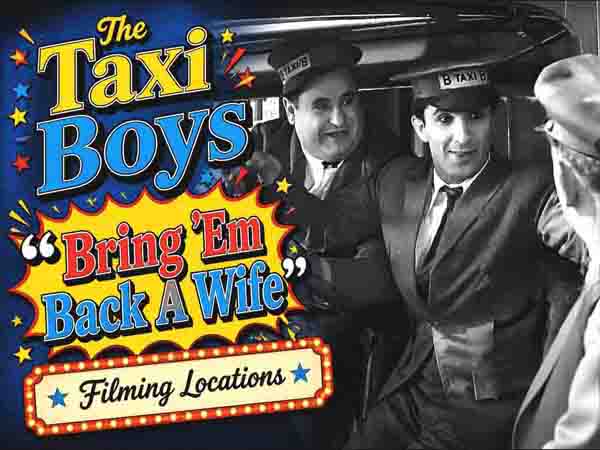
When Streetcars Ran Down The Middle Of The Streets
In the early 1930s, Hal Roach Studios launched The Taxi Boys, a comedy short film series featuring beloved supporting actors from the Our Gang and Laurel and Hardy franchises. Today, this series is considered a hidden gem for film historians due to its extensive use of real-world Los Angeles area filming locations.
A 1930s Downtown Culver City Time Capsule
This specific production offers a remarkable visual archive of Downtown Culver City during the early 1930s, capturing the streets before modern urban redevelopment altered the area:
- The Pacific Electric Railway "Red Cars": Viewers can spot incredibly rare historic footage of the iconic Pacific Electric Railway "Red Car" tracks.
- The Culver Boulevard Median: The vintage footage explicitly documents the streetcar tracks as they once ran directly down the center of Culver Blvd, providing an invaluable resource for transit historians.
A Then and Now Tour With The Taxi Boys
Click the button below to watch now!
Watch The Quick Preview Video NowThe Taxi Boys - Hot Spot (1932) - Filming Locations
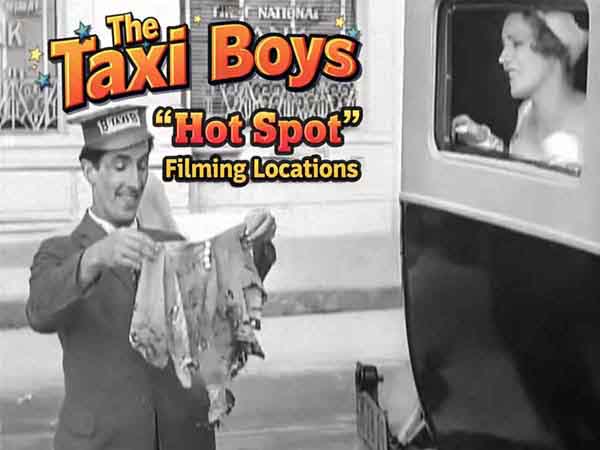
Downtown Culver City In 1932
Step back in time to early 1930s Los Angeles history with The Taxi Boys movie Hot Spot: A Look At A Street That No Longer Exists. Beyond the slapstick humor, this rare film serves as a remarkable visual archive of Downtown Culver City during the golden era of classic Hollywood.
Historic Culver City Landmarks Then and Now
- The Legendary Culver Hotel: The film was shot directly across the street from this iconic landmark, which was less than 10 years old when filming took place in 1932.
- The Lost Washington Boulevard Pedestrian Tunnel: One of the most fascinating geographical features captured is the entrance to a historic pedestrian tunnel that once ran directly under Washington Blvd at Van Buren Place, serving as a vital safety measure for pedestrians.
Join The Taxi Boys For A Filming Locations Tour
This exclusive Filming Locations Then and Now Quick Preview Video reveals how this specific historic block has been converted into a vibrant, walkable pedestrian plaza, effectively "erasing" the physical need for the historic 1930s tunnel.
Click the button below to watch now!
Watch The Quick Preview Video NowThe Taxi Boys - Taxi Barons (1933) - Filming Locations
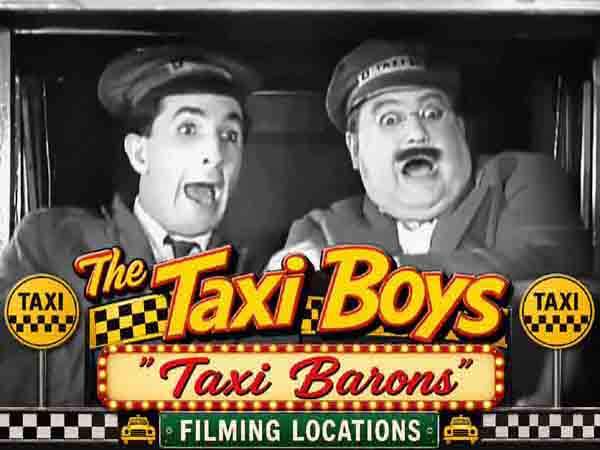
A High Speed Chase Through Downtown Culver City
Taxi drivers Ben Blue and Billy Gilbert accidentally knock over a policeman's motorcycle with their taxi. The motorcycle is undamaged though, and the cop pursues Ben and Billy through the streets of Downtown Culver City.
Like most of the other films in The Taxi Boys series, Taxi Barons features quite a bit of on location filming around the Los Angeles area and is another fantastic early 1930s time capsule.
The Filming Locations
- Van Buren Place at Washington Blvd with an excellent view of the Culver Hotel.
- Ince Blvd at Washington Blvd showing the block prior to today's Culver Steps development.
- Main Street between Culver Blvd and Venice Blvd when everyone parked diagonally and there weren't any trees lining the street.
Jump In A Cab With The Taxi Boys And Start The Tour!
Click the button below to watch now!
Watch The Quick Preview Video NowTyler Perry - Madea Goes To Jail (2009) - Filming Locations
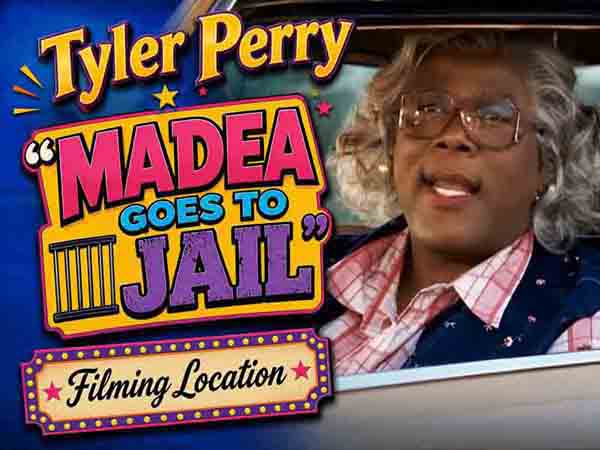
Visiting The Historic Parking Lot Scene Filming Location
One of the most memorable big-screen appearances for Tyler Perry's character Mabel "Madea" Simmons is in the 2009 box-office hit Madea Goes to Jail, which features a legendary parking lot showdown that fans still talk about today. This hilarious scene was filmed on location at a real-life shopping plaza in Mableton, Georgia.
Where Was Madea Goes to Jail Parking Lot Scene Filmed?
- Filming Location: 5590 Mableton Pkwy SW
- City and State: Mableton, Georgia (Suburban Atlanta)
- Original Anchor Store: Kmart (Now permanently closed and remodeled)
Then and Now: How the Mableton, Georgia Site Has Changed
While the big-box Kmart seen in the 2009 film has since closed its doors and been replaced by a new retail outlet with an altered storefront entrance, the rest of the plaza remains a perfect time capsule of the production. Walking through the parking lot today, location hunters can easily recognize the exact layout where Madea took her frontier justice out on a sedan.
Click the button below to watch now!
Watch The Quick Preview Video NowOther Classic Movies Filming Location Photo Galleries
Continue exploring!
Check out some samples of the website's TV Series filming locations then and now collection of photos.
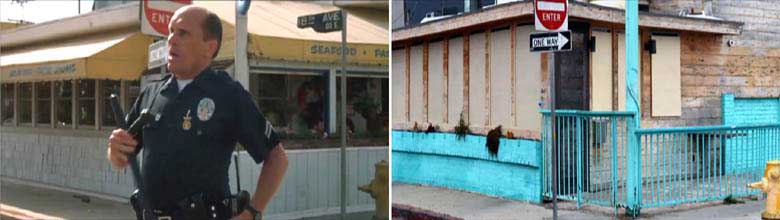
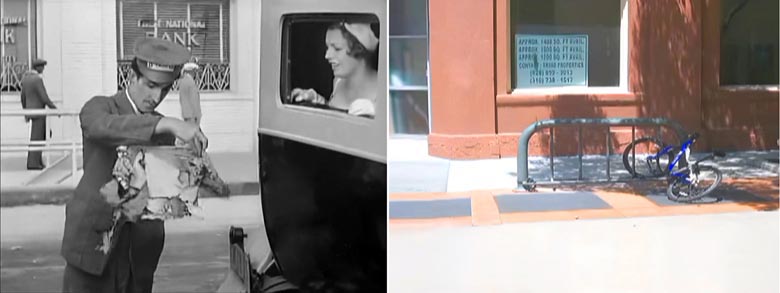 Other Classic Movies Filming Locations Photos Sampler
Support the site with a small donation to become a member and enjoy full, unrestricted access to the extensive collection of filming location content!
Become A Member Now!